If you are around ventilators this is a great card to have. It features the ARDS Net parameter guidelines - including FiO2/PEEP chart. This card has been introduced during the Covid-19 crisis to...
This card features the 12 cranial nerves (numbering 1 to 12 and roman numerals), their sensory/motor classifications, and their primary function/s. On the back is a basic test for each nerve's...
The FLACC scale is used to measure pain originally in young children who were unable to communicate their pain. It has been expanded to many populations with similar communication concerns. Pain is...
Insulins can be confusing! The names are fairly similar - and as soon as you get comfortable, the hospital changes the formulary! Have this insulin badge card handy with onset, peak, and duration for...
This card features Body Mass Index displayed in an easy to read visual grid breaking down BMI classifications into underweight, normal, overweight, obese, and extremely obese. Quickly reference...
This card features a skin layer cross section with associated burn depth levels and definitions. A great way to understand the current language & definitions used with burn classification. On the...
This card features an anatomical depiction of cardiac auscultation locations and associated valves. On the reverse it features common abnormal murmur patterns and waveform.
This card converts height in ft-in format to total inches or total cm. Great for medication calculation where height is a factor. Height range is 1ft 4in (16in) to 7ft 0in (84in). On the reverse it...
Ever need a little reminder for giving radio report to the hospital or during transfer of care? This card is the answer showing you the major points that should be included in your report. The...
This card features the classic Lund and Browder - Total Body Surface Area measurement tool. This is the gold standard for measurement Total Burn Surface Area and the only truly accurate tool used for...
This card walks you through two of the most commonly used IV medication formulas - converting dosing into cc/hr in either mg/min or mg/min/kg (alternatively: mcg/min or mcg/min/kg). It also...
No more calculations! This chart calculates Tidal Volume based on Ideal Body Weight. Just cross reference the patients height and the ordered Tidal Volume per kg to find the Total Tidal Volume. One...
Acts just like a pregnancy wheel but better! No guessing if it is on the line or not because this card is in an easy to read chart format. This card is also much more compact than any standard...
The RASS is used to describe a patient's level of alertness or agitation, most commonly during intubation to avoid over or under-sedation. Either extreme is bad for patient outcome and this tool...



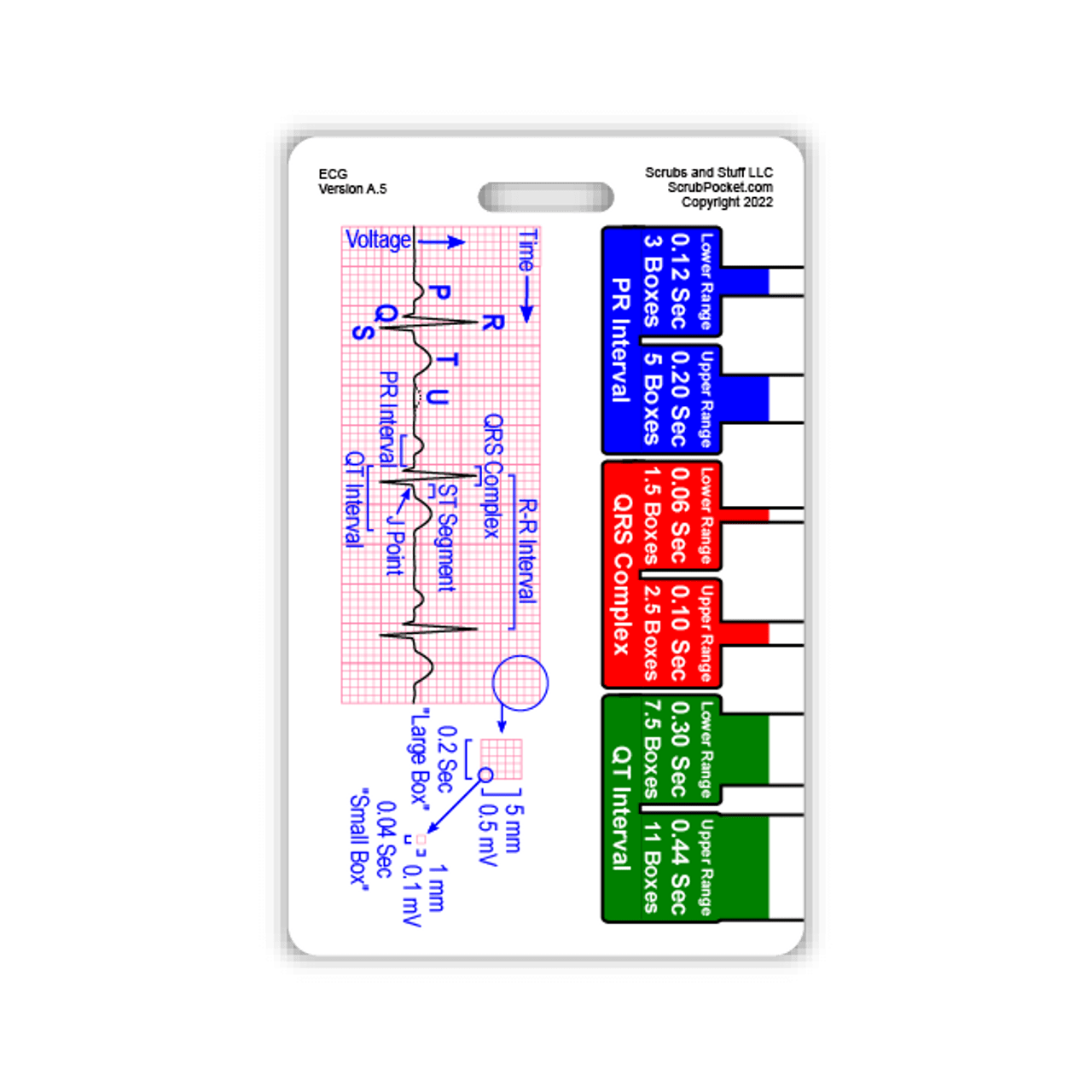

 ARDS Badge Card
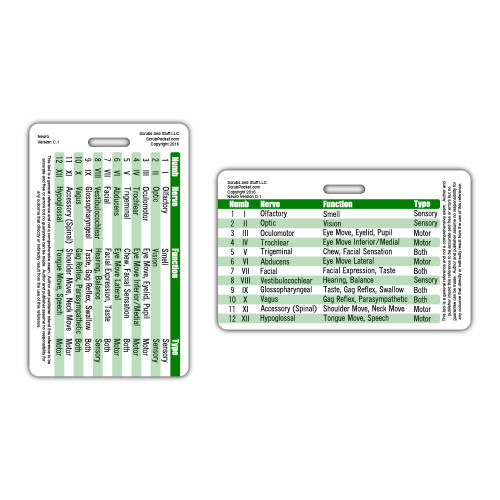
 Cranial Nerves Badge Card


 FLACC Badge Card

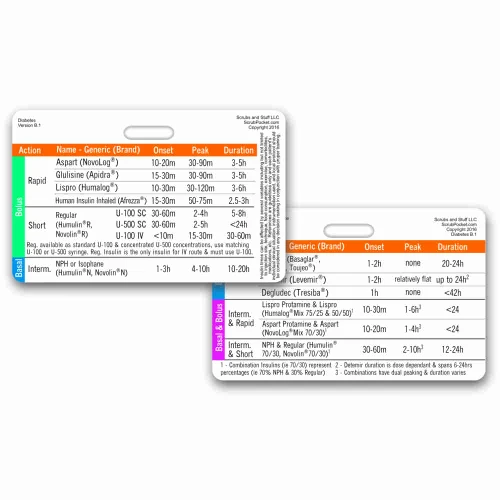 Insulin Badge Card

 Body Mass Index (BMI) Badge Card

 Burn Classifications and Parkland Formula Badge Card
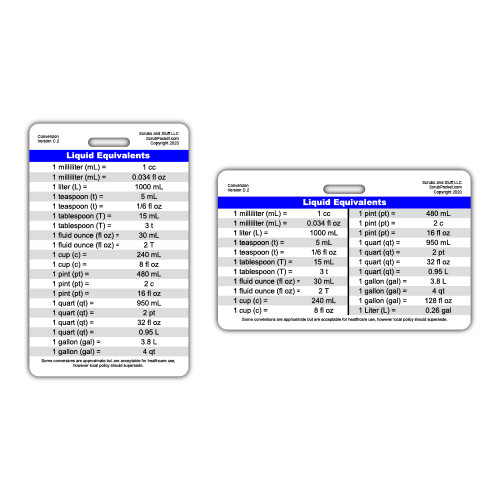
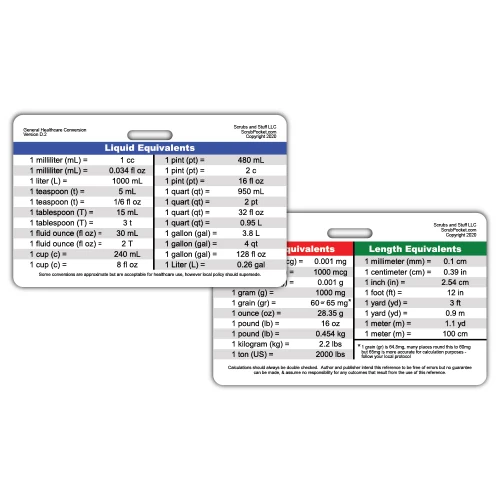 General Healthcare Conversions Badge Card

 Heart Sounds Badge Card

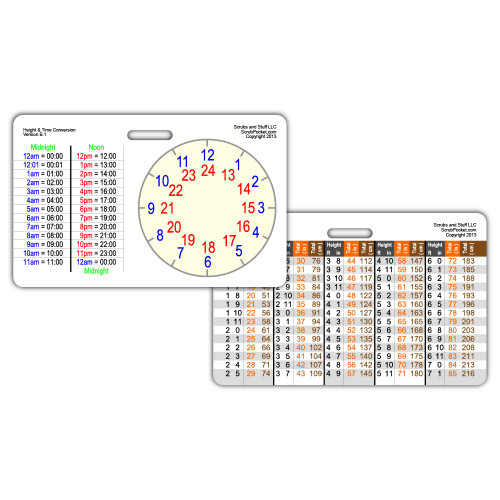 Height and Time Conversion Badge Card

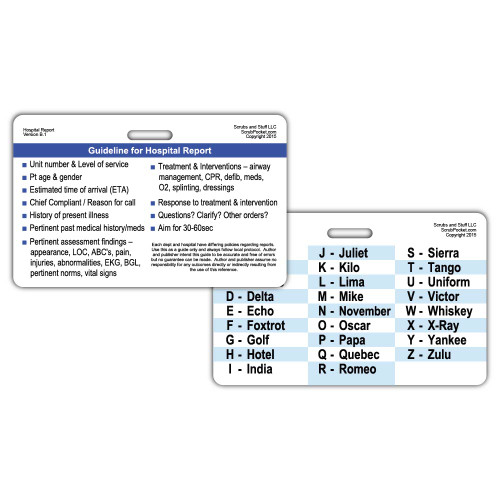 Hospital Report Guidelines with Phonetic Alphabet Badge Card

 Wound Ruler (Clear) Badge Card

 Lund and Browder Chart Badge Card
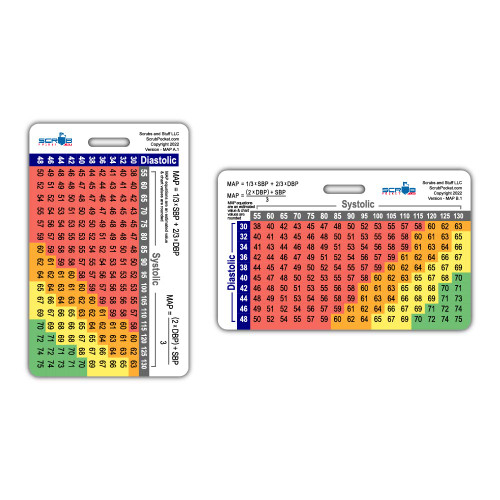
 Mean Arterial Pressure (MAP) Badge Card

 Medication Math & Drip Titration Badge Card

 Tidal Volume Badge Card

 Pregnancy Wheel Chart Badge Card

 RASS Badge Card